Greater Atlanta Speech and Language Clinics, Inc.
Offering a Full Range of Therapy Services for Infants through Adults Since 1982
About GASLC GASLC Programs GASLC Services Online Forms Resources Contact GASLC

Year Round Programs

Talking Tots

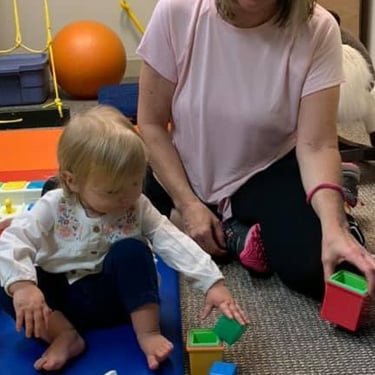
Talking Tots for toddler’s age 18 months up to 3 years will address each child’s language and development skills through fun and engaging themed activities.  Facilitated by a speech-language pathologist, the program is designed to improve social interactions, play skills, language comprehension, use of basic language concepts, and vocabulary expansion.  Each child will enjoy theme-based sessions to capture their interest and enhance overall communication.  Music, literature, socialization, and FUN will add to the children’s experience.  Camps are offered for 2 hour sessions one time per week for 6 weeks.

Year Round ProgramsSpeech Aerobics

An exciting program that combines exercise and language stimulation to enhance social skills, promote language development, build coordination, and strengthen muscle tone.  Children can interact, move, play games and communicate with their peers in a structured setting that encourages both speech and language as well as motoric development.  Speech Aerobics is designed and led by both a speech-language pathologist and physical therapist to allow children to reach their maximum potential in their daily environment.

Floortime

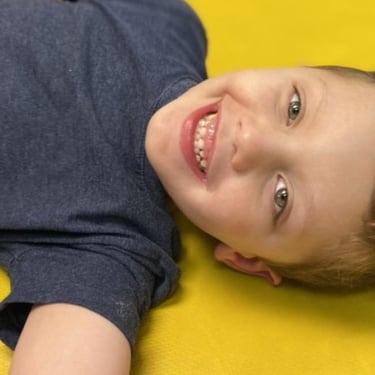
Floortime is a therapy technique that uses the Developmental, Individual Differences, Relationship-based (DIR) Model, developed by Drs. Stanley Greenspan and Serena Wieder. The DIR/Floortime Model is a comprehensive framework that has been shown to be highly effective in the assessment and treatment of Autism Spectrum Disorders (ASD) and related developmental disorders. It enables clinicians, parents, and educators to develop a program of intervention to fit the child’s unique profile and to address the child’s challenges and strengths. The DIR/Floortime Model emphasizes the critical role of parents and other family members because of the importance of their emotional relationships with the child. Floortime focuses on following the child’s lead and interests, while challenging the child towards increasing mastery of the cognitive (intellectual), emotional, and social capacities. Central to Floortime are playful interactions between the children and caregivers, which may occur on the “floor”, but often occur in other places in the child’s natural environment. One major strength of Floortime is that it tends to promote generalization of skills learned in therapy to other meaningful contexts in the child’s environment.  For more information please contact Lama K. Farran, Ph.D. at 770-977-9457.

Horse Talk - Hippotherapy

Speech-language and physical therapy are offered at Green Acres Equestrian Center, owned and operated by Joan Aronson, Founding Director of GASLC.  We have NARHA (North American Riding for the Handicapped Association) registered therapists and therapeutic riding instructors available to treat children with autism, PDD, cerebral palsy, mental impairments, speech delays, apraxia, Down syndrome, developmental delays and sensory disorders.  Therapists trained in hippotherapy can achieve improved posture, increased or decreased muscle tone, and improved coordination and balance using the unmatched three-dimensional movement of the horse.  By varying the position of the child, progress can also be made with specific sensory integration goals.  Dramatic changes have also been documented in children’s communication skills utilizing a hippotherapy approach.  With the enhanced arousal and attention brought on by the input of the horse’s movement, the child becomes more receptive to learning and to the therapist’s interventions.  

The Lindamood Phoneme Sequencing Program (LIPS®)

A program to improve phonemic awareness, phonemic decoding, orthographic processing, sight word reading, spelling, reading fluency, & writing skills.  The Lindamood Phoneme Sequencing® (LiPS®) Program helps to improve these skills by making children aware of the mouth actions which produce speech sounds. They are then able to be aware of the sounds within words and can self-correct in reading and spelling, and speech.

Baby Sign

Infants develop the fine muscles in their hands before they develop those required for speech, so your baby is ready
to communicate with you before they can speak.  The most common reason for teaching your baby sign is to find out exactly what is going on in a baby’s mind.  But there are many more benefits including: reducing frustration, making learning to speak easier, stimulating intellectual development, and increasing self-confidence.  The signs that are taught are symbolic gestures that are one form of communication used by pre-verbal infants and toddlers. A baby has the potential use of his hands and body to aid in communicating his thoughts, wants, fears, needs and memories.  When babies learn sign language, this skill provides him or her with a powerful educational tool of earlier communication.  Learning sign language does not delay speech, but in fact aids speech development.

Our classes are offered for children up to 18 months of age and are taught by a speech-language pathologist and certified Baby Signing Time Instructor

Early Intervention Program

The Early Intervention Program provides comprehensive evaluation and treatment of special needs babies and children ages 0-3 years.  Services are provided by a collaborative team of early intervention specialists and professionals including speech-language pathologists, occupational therapists, physical therapists, music therapists, etc.  Following evaluations, a variety of recommendations will be made, and our team will help parents to coordinate services. 

Baby WhysBaby "WHYS"

Baby “Whys” is a parent and me class designed for typically developing as well as special needs infants and babies 0-12 months.  It teaches parents the “why” and the researched based evidence behind everyday activities that they should be doing with their infant.  Organized and led by a physical therapist, occupational therapist, and/or speech-language pathologist, both motor milestones and communication milestones will be discussed, and activities will be demonstrated to promote optimal development.  Additionally, parents will learn the importance of meeting each milestone and how to support their baby’s physical and communicative development by providing appropriate toys, games, activities, and interactions.

School Screenings

Greater Atlanta Speech and Language Clinics offers school screenings for speech-language and hearing for children ages 3 and older.  An optional vision screening is offered as an additional service for children ages 4 and older.  The screenings are performed at pre-schools, private schools or at our clinic by licensed, clinically trained, highly qualified, speech-language pathologists who hold Master’s Degrees in speech-language pathology.  Our early identification-screening program is designed to detect a problem as early as possible so that appropriate remediation measures can be taken before it has a chance to compound into a more complex problem. Results are provided for parents shortly after the screening so that, if necessary, a full evaluation can be performed to determine recommended therapies.